Tuesday, February 1, 2011

Lumineers Day!


Join us for Lumineers Days on April 6th, and 7th, 2011! Receive up to
$350 off per unit when Lumineers is ordered.

Regularly priced at $1,200, on Lumineers Day priced at $850!

Call our office to make an appointment today! 858-350-7400.


Sunday, October 10, 2010

Dental X-Rays & Oral Cancer

Dental X-Ray

  • Many oral diseases can't be detected on the basis of a visual and tactile examination alone. Dental X-ray exams are valuable in providing information about your oral health such as early stage cavities, gum diseases, abscesses or some types of tumors. X-rays can help dentists catch and treat oral health problems at an early stage.
  • How often dental X-rays should be taken depends on your oral health condition, your age, your risk for disease and any signs and symptoms of oral disease you may be experiencing. Let's talk about what is right for you.
  • The American Dental Association has information about dental X-rays on its Web site at ADA.org if you would like more information.


Oral Cancer

  • People can get lesions, sores or spots in their mouths for a variety of reasons and many times these sores go away on their own and pose no problem. However, if you have a sore or spot in your mouth that has been there for more than two weeks, it's important that it be evaluated.
  • As your dentist, I routinely screen you for oral cancer by carefully examining your mouth, tongue and neck. If I find anything suspicious, I may refer you directly to an oral surgeon or physician for further evaluation or I may screen any suspicious spot or sore in my office. If I conduct a screening in my office, it can help me determine whether a referral is indicated.
  • The screening I conduct in my office is just a screening... not a definite diagnosis... only a surgical biopsy can confirm if a lesion, spot or sore is oral cancer.
  • The best way to prevent oral cancer is to avoid risky behaviors including tobacco and alcohol use.
  • For more information on oral cancer, visit the American Dental Association's Web site at ADA.org and the Journal of the American Dental Association patient page on detecting oral cancer early here.

Monday, October 4, 2010

You and Your Dentist

How to get the most from your partnership

Think of the relationship between you and your dentist as a partnership, your dentist can offer a range of dental treatment options for many oral health problems. Theses option will vary in complexity, durability and cost but working together, you can choose the treatment options that best suit your needs and budget.

A good dentist will explain each treatment option, including it's benefits and drawbacks. It is important that you tell your dentist about yourself and your needs and you shouldn't be afraid to ask the dental team questions if necessary in order to help you understand their oral treatment recommendations.

The key to all good relationships is trust and understanding as it should be between you and your dentist, you should therefore try to build a relationships based on open and honest communication. A good dental team will be more than happy to explain the oral care program they are proposing for you but if you don't understand any aspect you may want to ask some or all of the following questions.

Can you give me a step by step breakdown as you make your oral examinations? What are the treatment options in respect of my specific needs? Are there any alternative treatments I should consider? Which of these options would give me the best outcome? What needs to be treated now and what can wait to be treated later? What can I do in future to avoid similar problems reoccurring? Concerns

Confidence and trust are key factors when visiting your dental team, a dental expert said, "Dentists are trained to understand their patients worries and cam empathize with them. Your dentist should be an expert, not just in technical dentistry but in communication, empathy, understanding and be able to deliver care in a professional manner". He also stated "that cost was actually quite low on their list of concerns, a hygienic, friendly environment is more important for most people".

Many people have a level of anxiety when visiting their dentist, probably based on a bad experience from their childhood when dental techniques were not as good as they are today. Things are somewhat different today as modern dental care and new techniques and advances mean that the discomfort you may remember from your childhood is considerably less today.

Advice

Don't wait for your dentist to sort out your problems, our expert stated "Avoid problems by sticking to a good mouth care routine in the first place, healthy teeth are within everyone's reach".

Remember you and your dentist are a team and good oral health is your goal.
About the Author Tony Forster has a keen interest in dental care and bad breath treatment and has compiled many useful resources at: www.eliminate-bad-breath.info

The content of this article is for information purposes only, it is advisable to consult your medical or dental practitioner before implementing any program or change to your current regime.

Thursday, September 2, 2010

Something for the Fall...


Offer expires soon! Call our office for more information!

Thursday, August 26, 2010

Post-Op Instructions: Extraction

Extraction

1- Pressure should be placed on the gauze pad that has been put over the extraction site for one hour. If the bleeding continues new gauze should be placed and pressure applied for another 45 minutes.

2- If you are supervising children who have had an extraction done, make sure they don’t bite on their numb lips or tongue (it can cause serious injury to their soft tissue).

3- Avoid eating or drinking anything hot on the day of your extraction. Also, do not rinse your mouth and do not use a straw for drinking. Do not spit and do not drink carbonated beverages. Do not brush on the day of the surgery; you can gently resume your brushing and flossing the day after.

4-You may experience some pain, bruising around your lips, and/or some swelling, especially after extraction of impacted wisdom teeth. Ice bag application and medication prescribed for you will help to minimize your discomfort.

5- Please take all the medication you have received based on the provided instructions.

6- During the first 2-3 days after surgery a diet of soft food and liquids is recommended (soup, yogurt, milkshakes and juice).

7- For more complex surgical procedures, including Impacted Wisdom Tooth Extraction, Implant Surgical Procedures, etc: You will receive an ice wrap which should be worn for the rest of the day until you go to bed on the day of surgery (10 minutes on and 5 minutes off). Instructions for various surgical treatments will have some unique directions, which will be supplied to you at the time of your treatment.

8- Call our office if you experience excessive bleeding, severe pain or swelling, or if you have any questions or concerns. In case of serious emergencies call 911.

Check back in the future to get more post operative instructions for other procedures! In case of an emergency, call 911 or our office.

Wednesday, July 14, 2010

Root Canals

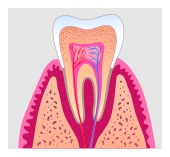
Every tooth consists of three different layers. The outermost and hardest layer is enamel, and the second layer is dentin. The third is pulp, which is the cavernous space where the live tissue and nerve of each tooth is located.

If for any reason the pulp space is exposed to the outside, the tissue becomes contaminated and eventually infected. The exposure of pulp happens in many circumastances, such as when you have a large cavity or a fractured tooth. Your dentist can explain the exact reason for damage to this tissue. In these cases, the treatment is usually root canal treatment.root canal

Root canal treatment is the process of goingaaa inside the pulp space and
removing the infected, dead tissue. The space is then disinfected and sealed with special materials. Nowadays, root canal treatments are performed with advanced techniques and materials, making them far more comfortable and faster. After root canal treatment is complete, your restorative dentist will usually place a crown on your tooth to safeguard against fracture.